 Book
Book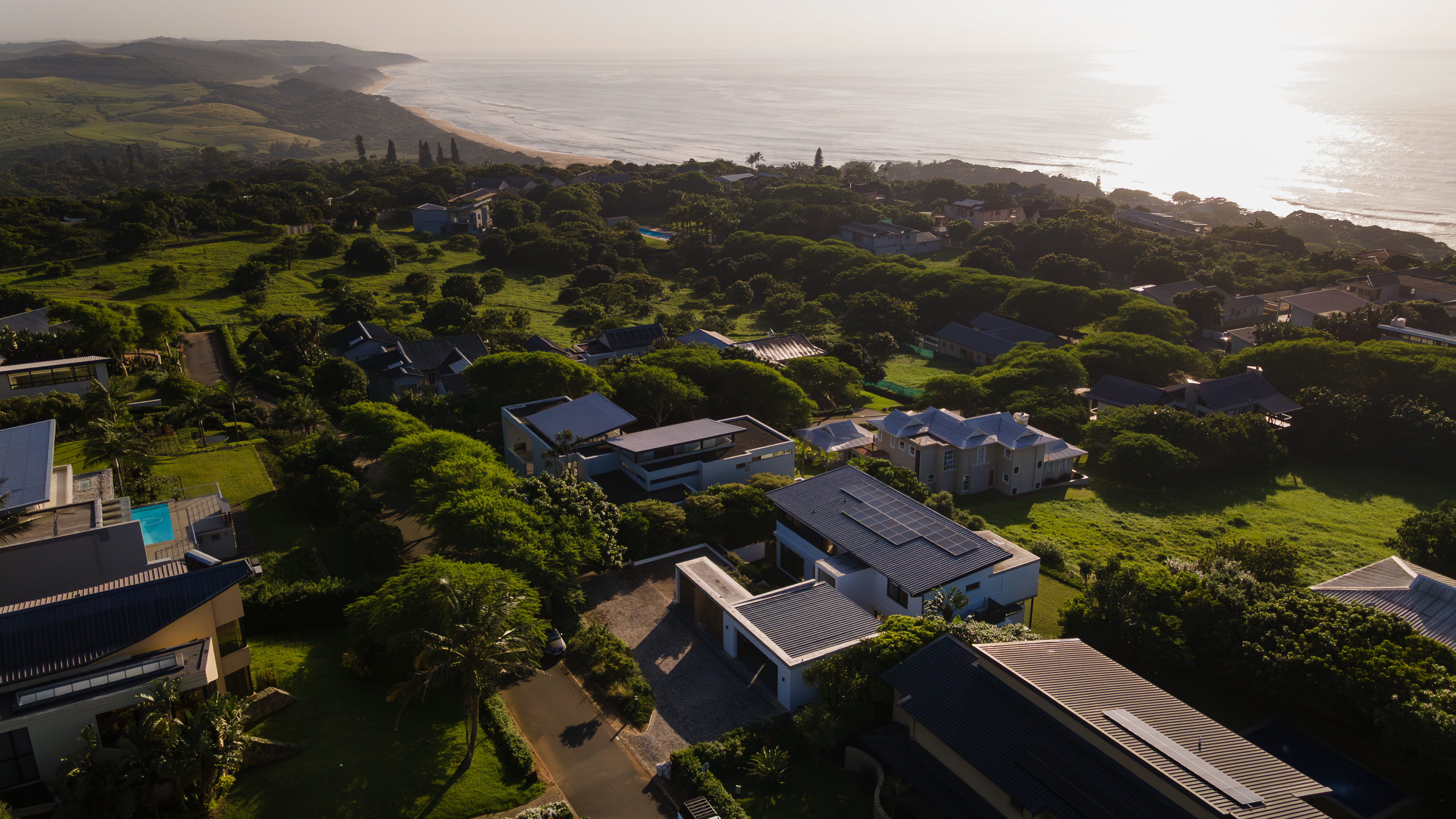
There's a moment, driving north from Ballito along the R102, when the sugarcane fields open up and you catch your first glimpse of Zinkwazi — a stretch of coastline that feels like it hasn't quite caught up with the rest of the North Coast's development, and locals will tell you that's exactly the point.
What's in a name
Zinkwazi means "place of the reeds" in isiZulu, referring to the reeds that once grew thick along the banks of the Nonoti River and the lagoon that gives the village its distinctive shape. Some versions of the story point instead to the Zinkwazi bird — a type of heron common to the estuary — but either way, the name has stuck for well over a century, long before the first holiday cottages appeared.
From sugar and fishing to a holiday hideaway
Long before Zinkwazi was a name on a map for weekenders from Durban and Johannesburg, the area was home to Zulu communities who fished the river mouth and farmed the fertile land inland. When British and Indian settlers arrived in the late 1800s, sugarcane took over the landscape — you can still see the old cane fields rolling away from the coast today, and several local families trace their roots back to those original farming operations.
The village itself really began to take shape in the mid-20th century, when a handful of Durban families started building simple beach cottages along the dunes, drawn by the fishing — Zinkwazi has long had a reputation among anglers for grunter, kob, and shad — and by a lagoon that was calm enough for children to swim safely, unlike the more exposed beaches further south.
Unlike Ballito, which grew quickly into a fully-fledged town with high-rises and shopping centres, Zinkwazi deliberately stayed small. There's no traffic light in the village. The tallest buildings are still only a few storeys, and much of the dune vegetation and coastal forest around the lagoon has been protected rather than cleared for development. That's not an accident — local residents' associations have pushed hard over the decades to keep large-scale development out, and it shows the moment you arrive.
The lagoon that shaped everything
The Zinkwazi Lagoon is really the heart of the town's history. It's where the original fishing families launched their boats, where generations of local kids learned to swim and paddle, and where the tidal rhythm still dictates a lot of daily life — from when the fish are biting to when it's safe to cross the sandbar on foot to reach the northern beach. Older residents still talk about the wooden pont that used to ferry people and vehicles across the river before the current bridge went in, connecting Zinkwazi more easily to the N2 and the rest of the coast.
Zinkwazi today
These days Zinkwazi is popular for exactly the reasons it was originally settled: uncrowded beaches, excellent fishing and birdlife (it's a short drive from the iSimangaliso Wetland Park and St Lucia further north), and a pace of life that feels a world away from Ballito's bustle despite being only about 40 minutes north up the N2. It's still very much a family town — the same surnames show up on old cottage gates and new holiday homes alike — and that continuity is part of what makes it special to visit.
If you're staying with us in Zinkwazi, ask your BMS host about the old fishing spots along the lagoon, or the walking trail through the coastal forest — it's one of those bits of local history that doesn't make it onto most travel sites, but locals are always happy to share it with guests who ask.